
Chowdhury SEO Consulting provides strategic on-page SEO services designed to help important website pages become more relevant, useful, and competitive in search.
We analyze how each page targets search demand, satisfies user intent, communicates its topic, connects with other pages, and supports business goals. From service pages and landing pages to category pages and existing content, our approach focuses on improving the signals that help search engines understand a page while giving visitors the information they need to take the next step.
Effective on-page SEO is not about inserting more keywords. It is about creating stronger alignment between what customers search for, what your page communicates, and what your business wants that page to achieve.
Tell us about your business and what you want to achieve.
Your information is kept private and will only be used to respond to your inquiry.
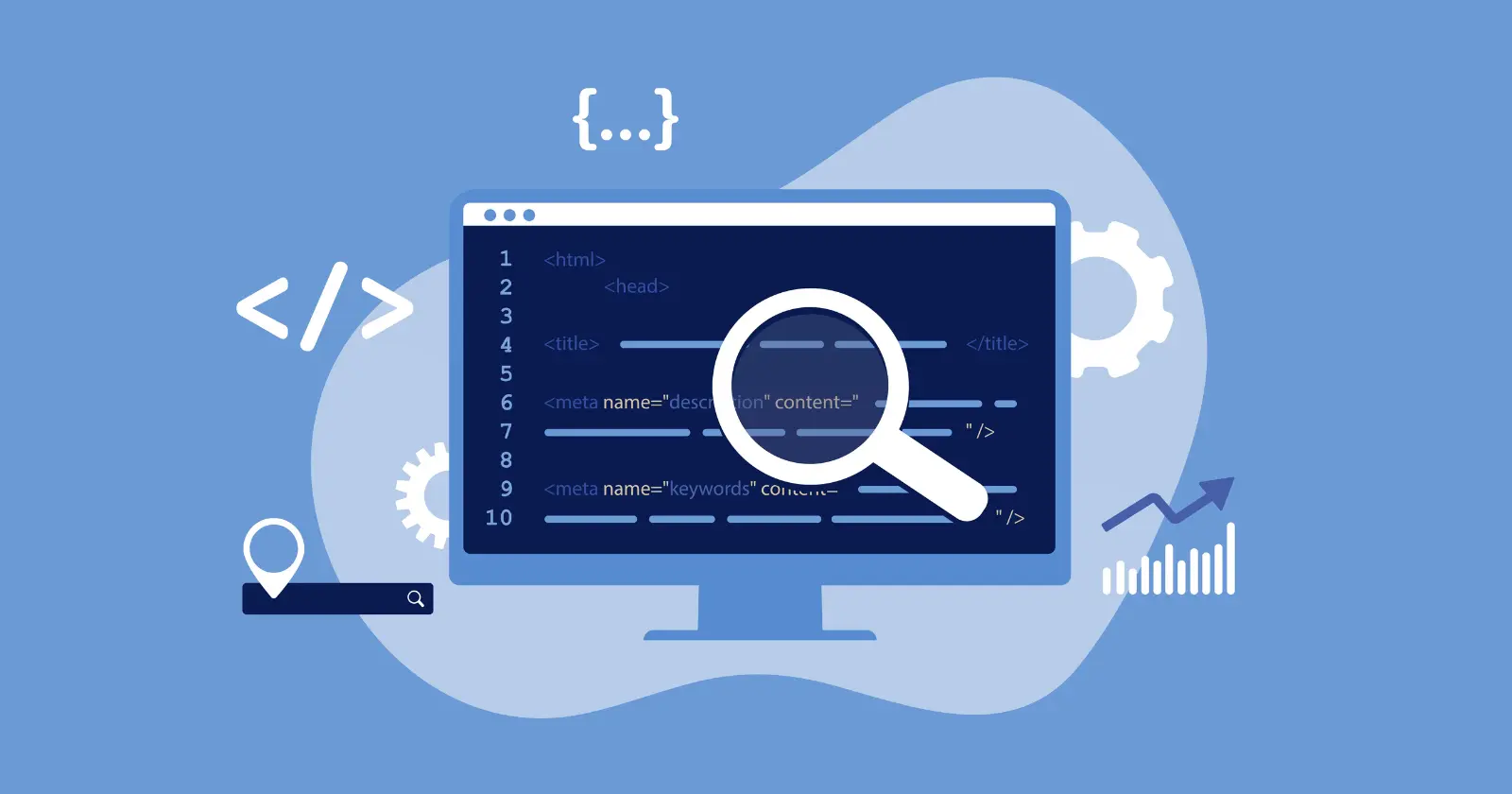
A technically functional website can still struggle to perform if its individual pages are poorly targeted or do not satisfy the searches they are intended to rank for.
A technically functional website can still struggle to perform if its individual pages are poorly targeted or do not satisfy the searches they are intended to rank for.
Important service pages not ranking for valuable searches
Pages targeting keywords with the wrong search intent
Several pages competing for the same topic
Weak title tags, headings, or page structure
Important supporting information missing from the content
Internal links failing to support priority pages
Content attracting visitors who are unlikely to convert
Pages remaining on page two or three despite having ranking potential
Competitors covering important topics more effectively
Search listings receiving impressions but few clicks
On-page SEO helps identify why these gaps exist and what should be improved before making unnecessary changes.
Our work focuses on the page-level factors that influence relevance, usability, search visibility, and performance.
We determine what each page should target, which searches belong together, and what users expect to find when making those searches.
Existing content is reviewed for relevance, clarity, topical coverage, keyword alignment, supporting information, and usefulness.
We optimize title tags, meta descriptions, H1s, supporting headings, and content hierarchy so the purpose of the page is clearer.
We identify opportunities to connect related content and strengthen strategically important service, product, category, or landing pages
Images, alternative text where appropriate, supporting media, and surrounding content are reviewed to ensure they contribute meaningfully to the page.
Information is organized so visitors can understand the page quickly and move naturally toward relevant actions.
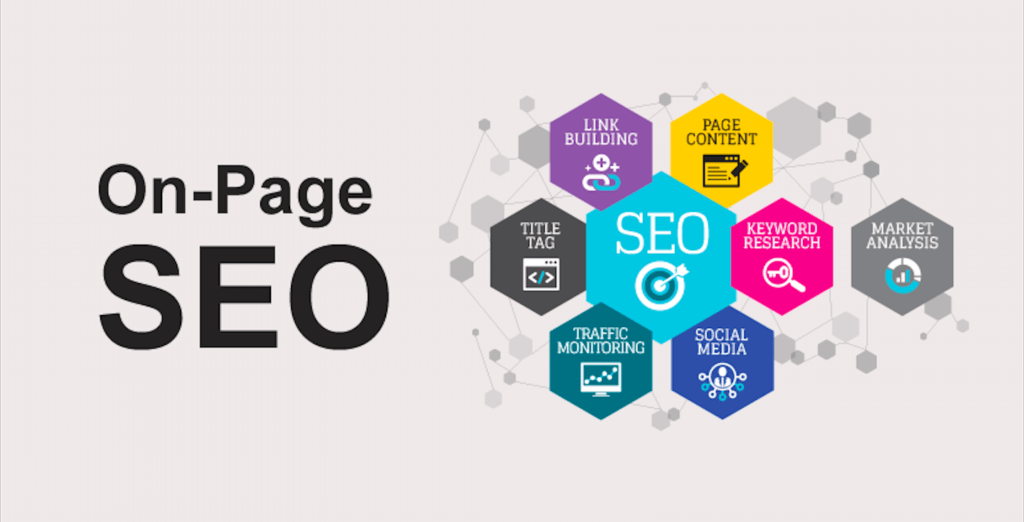
We do not begin optimization with a generic checklist. We first determine why a page is underperforming and where realistic opportunities exist.
We review existing rankings, impressions, clicks, traffic patterns, near-ranking keywords, and the role of the page within the website.
We analyze the intent behind valuable search queries to understand whether users expect a service page, guide, comparison, product page, category page, or another type of result.
Pages currently performing well are reviewed to understand competitive expectations, content patterns, useful subtopics, and gaps.
We identify missing explanations, questions, entities, attributes, services, comparisons, and supporting subjects that may improve the completeness of the page.
We also review whether multiple pages are competing unnecessarily and whether internal links are supporting the correct destination.
Our process connects research with implementation so changes are made for a clear reason.
01
We establish what the page currently does, what it ranks for, and what business purpose it should support.
02
Primary search intent, supporting topics, and relevant query groups are mapped to the most appropriate page.
03
We compare the page against relevant search competitors and identify meaningful gaps
04
Content, structure, metadata, internal linking, and other improvements are prioritized according to potential impact..
05
Approved recommendations are applied or prepared for your internal content, SEO, or development team.
06
Performance is monitored so further changes can be based on ranking, traffic, engagement, and conversion data rather than assumptions.
Execution varies depending on what the research identifies.
We may strengthen content relevance by improving topical coverage and removing sections that add little value. Heading structures can be reorganized so important subjects are easier to understand. Keywords and related terminology are incorporated naturally where they provide useful context rather than being repeated simply for density.
Internal links are reviewed to improve relationships between supporting content and important commercial pages. Titles and meta descriptions can also be refined to better communicate relevance and improve how pages are presented in search results.
Where appropriate, we evaluate whether important entities, questions, attributes, services, or supporting subjects are missing.
For commercial pages, optimization also considers conversion alignment. A page should not only attract search traffic; it should help qualified visitors understand the offer and move toward the appropriate next action.
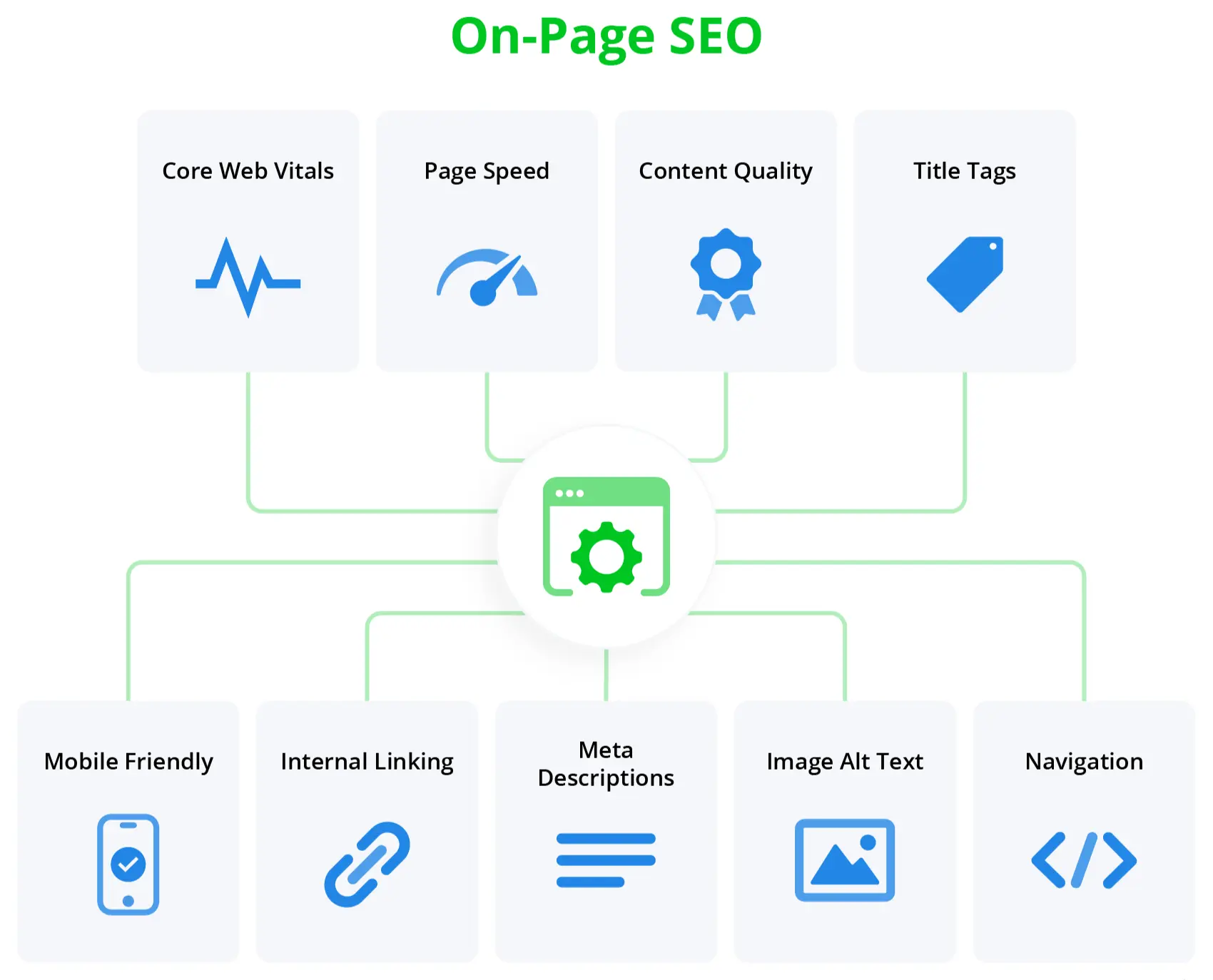
Depending on the project scope, deliverables may include:
The scope is based on what each website actually needs rather than forcing every client through the same package.
We first determine what searchers are trying to accomplish before deciding how a page should be optimized.
Recommendations are based on current performance, search results, competition, website structure, and business priorities.
Pages are not treated as isolated documents. We consider how they fit within the wider website architecture and customer journey.
Optimization should improve search relevance while keeping content clear, useful, and natural for real visitors
We focus first on pages and opportunities with the strongest potential to support visibility, qualified traffic, leads, sales, or other commercial objectives
Effective on-page optimization can help your website achieve:
Make it easier for search engines to understand which searches a page is relevant to.
Improve visibility around searches that closely match your products, services, and customer needs.
Better titles and descriptions can improve how important pages are presented in search results.
Strategic internal linking can strengthen relationships between supporting content and priority pages.
Clearer, better-targeted pages can help turn relevant search visitors into enquiries, consultations, bookings, or customers.
On-page SEO can include search-intent analysis, keyword targeting, content optimization, titles, headings, metadata, internal links, images, page structure, and other page-level improvements.
On-page SEO focuses primarily on individual page relevance and content. Technical SEO focuses more heavily on crawlability, indexing, site performance, architecture, and technical accessibility.
Yes. Existing pages can often be improved without replacing all of their content. The required changes depend on current performance, intent, competition, and content quality.
We consider business relevance, search intent, existing performance, competitive results, search demand, and how the page fits within the wider website.
Yes. Pages already receiving impressions or ranking near stronger positions may have opportunities involving intent alignment, content gaps, internal linking, or search-result presentation.
Clear page structure, useful content, strong topical context, and well-organized information can make website content easier for both traditional search systems and AI-powered discovery platforms to understand.
If important pages are not achieving the visibility or qualified traffic they should, the first step is understanding why.
Chowdhury SEO Consulting can review your priority pages, current search performance, competitors, content structure, search intent, and internal linking to identify the improvements that deserve attention first.