- ― Semantic SEO
Semantic SEO Services That Build Topical Authority and Search Visibility
Ranking for one keyword is no longer enough to build durable organic growth. Search engines evaluate pages in context: what a page is about, how it connects to other topics, and whether it satisfies the searcher’s intent.
Chowdhury SEO Consulting uses Semantic SEO to organize content around topics, entities, relationships, questions, and intent. The goal is not to repeat keyword variations. It is to make your website clearer, more useful, and easier for people and search systems to interpret.
Request Your Free SEO Consultation
Tell us about your business and what you want to achieve.
Your information is kept private and will only be used to respond to your inquiry.
What Semantic SEO Means for Your Website
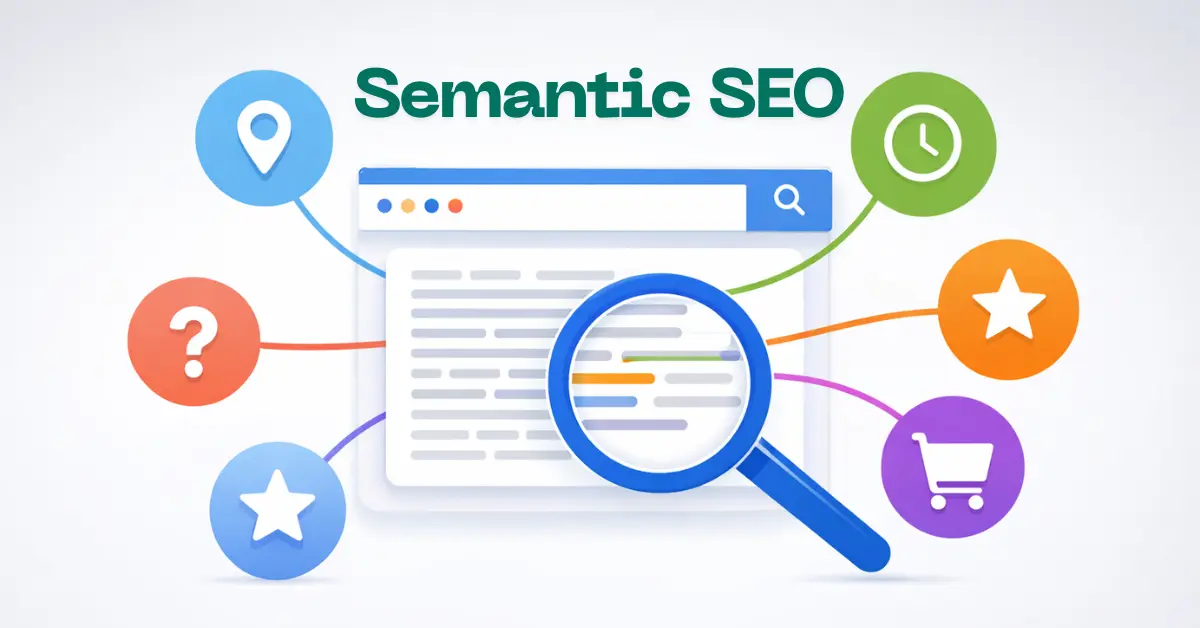
Semantic SEO optimizes content around meaning and context rather than relying only on exact-match keywords. It considers the main topic, connected entities, customer questions, important attributes, and relationships between supporting pages.
For a business website, that may mean connecting a core service page with content about problems, comparisons, processes, costs, and FAQs. Each page has a distinct role, but together they create a stronger topical system.
Why Keyword-Only SEO Leaves Gaps
A page can contain the right keyword and still fail to compete. It may answer only part of the topic, miss important subtopics, use weak internal linking, overlap with another page, or sit inside a site with no clear subject structure.
Common problems include overlapping pages, fragmented topic coverage, weak support for important services, and mixed relevance signals. Semantic SEO addresses the structure behind these problems.
How Does Semantic SEO Work?
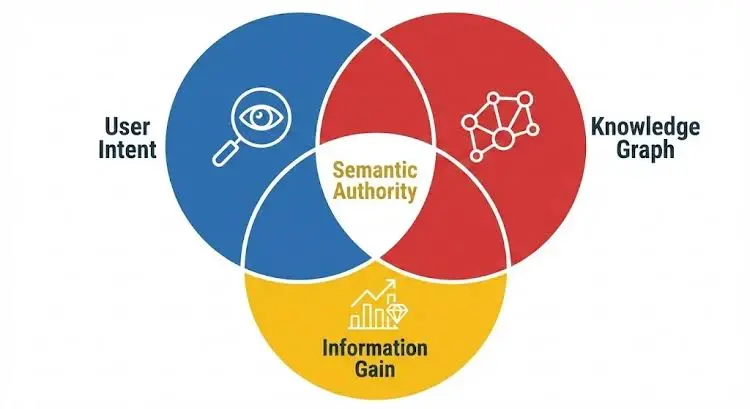
Semantic SEO works by connecting topics, entities, search intent, and supporting information across your website. Instead of optimizing each page for one isolated keyword, it creates clear relationships between core pages and related subtopics. Search engines use these connections, along with internal links, page structure, contextual content, and structured data, to better understand meaning and relevance. This helps build stronger topical coverage, reduces content overlap, and improves the chances of appearing for a wider range of related searches.
Semantic Keyword, Entity and Intent Research
Our research starts by identifying what people actually mean when they search.
We analyze search intent, related entities, customer problems, SERP patterns, competitor topic coverage, and questions across the buying journey.
This helps us decide which terms belong on one page and which topics deserve supporting pages. It also reduces a common SEO problem: creating several pages that target different phrases but answer the same intent.
Build Topic Clusters Around Customer Journeys
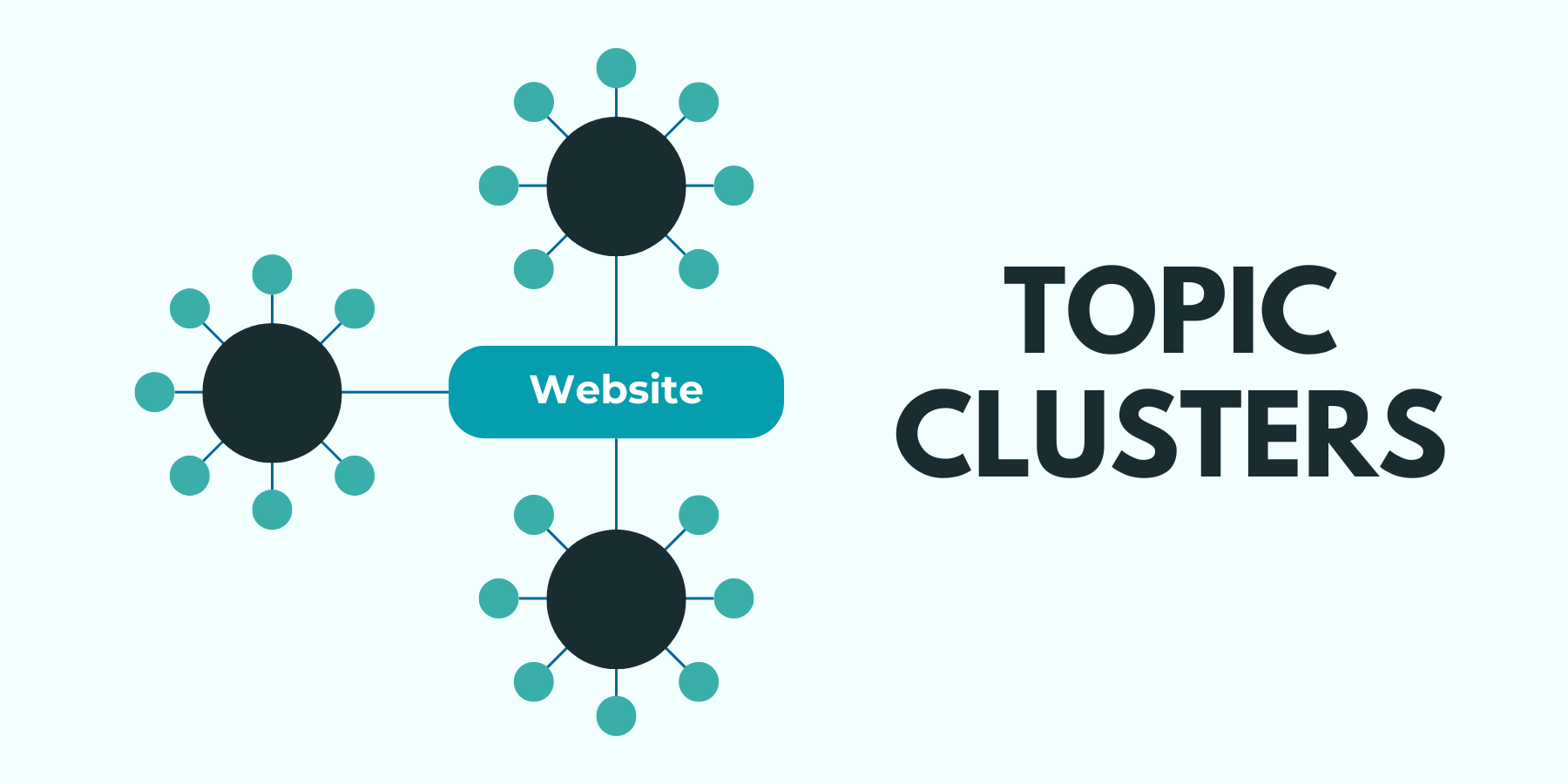
A strong semantic strategy connects a central topic with logically related subtopics.
A service pillar may connect to pages about specific problems, solutions, industries, comparisons, implementation steps, and decision criteria. Each supporting page should answer a distinct search need rather than exist simply to increase page count.
We map these relationships before content production so the site grows with direction.
Internal Linking That Explains Relationships
Internal links help establish how pages relate, which pages are most important, and where users can continue their research.
We connect pillar pages, supporting resources, service pages, location pages, and conversion pages using contextual links and descriptive anchor text. The objective is not a fixed number of links; it is a navigation path that makes sense for the topic and the user.
Improve Existing Content Before Publishing More
Semantic SEO does not always require more content.
Many websites already have useful pages, but those pages may be disconnected, thin in key areas, or competing with one another. We review existing content for topic gaps, intent mismatch, keyword cannibalization, repetition, weak hierarchy, and missing supporting information. Some pages need expansion; others need consolidation or repositioning. The goal is to strengthen what already exists before creating unnecessary new pages.

Structured Data and Clear Page Meaning
Where appropriate, we review structured data that provides explicit information about page content, such as Organization, LocalBusiness, Product, Article, Breadcrumb, or other supported schema types.
Structured data is not a substitute for strong content, and schema does not guarantee better rankings. It works best when the markup accurately reflects what visitors can see on the page.
Semantic clarity begins with the content itself. Structured data supports that clarity.
Semantic SEO for Google and AI Search
Search discovery now extends beyond conventional listings. Users may encounter information through Google AI Overviews, AI Mode, assistants, and other generative search experiences.
There is no shortcut that guarantees inclusion. Strong SEO fundamentals still matter: accessible pages, original information, clear site structure, descriptive internal links, and content that answers real user needs.
Semantic SEO supports this environment by making topics and relationships clearer across the website instead of optimizing isolated pages for isolated keywords.
Our Semantic SEO Process
A semantic SEO campaign requires research, implementation, monitoring, and continuous improvement.
01
Website and Topic Audit
We evaluate existing pages, rankings, internal links, content overlap, and topic coverage.
02
Search Intent and Entity Mapping
We identify core topics, related concepts, customer questions, and commercial intent.
03
Topical Architecture
We decide which subjects belong on pillar pages, supporting pages, service pages, or other content types.
04
Content Optimization
Pages are improved for completeness, relevance, hierarchy, and intent satisfaction.
05
Internal Linking and Semantic Signals
We connect related pages with contextual links, clear anchor text, breadcrumbs, and appropriate structured data.
06
Performance Review
We monitor query growth, content gaps, and page performance, then expand the topical map where evidence supports it.
Why Choose Chowdhury SEO Consulting for Semantic SEO?
Semantic SEO requires more than adding related words to existing copy.
Chowdhury SEO Consulting combines keyword research, competitor analysis, content strategy, technical review, internal linking, and business context to build a system around your most valuable topics.
Our recommendations reflect your website, competitors, and customer needs. We focus on useful relationships between pages rather than producing content simply for volume.

What Semantic SEO Can Help Improve
A well-planned semantic strategy can support:
Broader visibility across related searches
Stronger topical authority
Better alignment with search intent
Reduced keyword cannibalization
Stronger support for commercial pages
Clearer website architecture
More sustainable organic growth
Frequently Asked Questions (FAQs)
Is Semantic SEO different from normal SEO?
Semantic SEO is part of modern SEO. It focuses more heavily on meaning, context, entities, topic relationships, and intent rather than optimizing a page around one exact keyword.
Does Semantic SEO require hundreds of articles?
No. A smaller set of well-planned pages can be more valuable than a large collection of overlapping content. The right volume depends on your market, website, competition, and customer journey.
Can Semantic SEO help with AI search visibility?
It can improve the clarity and usefulness of your website for modern search systems, but no SEO method can guarantee placement in AI-generated results.
Build a Stronger Search Presence Around the Topics That Matter
Semantic SEO can turn disconnected pages into a more coherent search asset.
Chowdhury SEO Consulting can analyze your content, identify semantic gaps, map high-value topics, and create an SEO roadmap built around customer intent and business priorities.
Start with a Semantic SEO review and discover where stronger topic relationships can create new search opportunities.